MULTIPLAYER GAME DEVELOPMENT

Multiplayer development designed around the game loop.

Sourcegarden Studio works across game networking, authority, prediction, sessions and dedicated servers. Our evidence spans four-player VR co-op, client-predicted competitive mobile VR and a large-scale PC FPS with mutable networked terrain.

Discuss your project
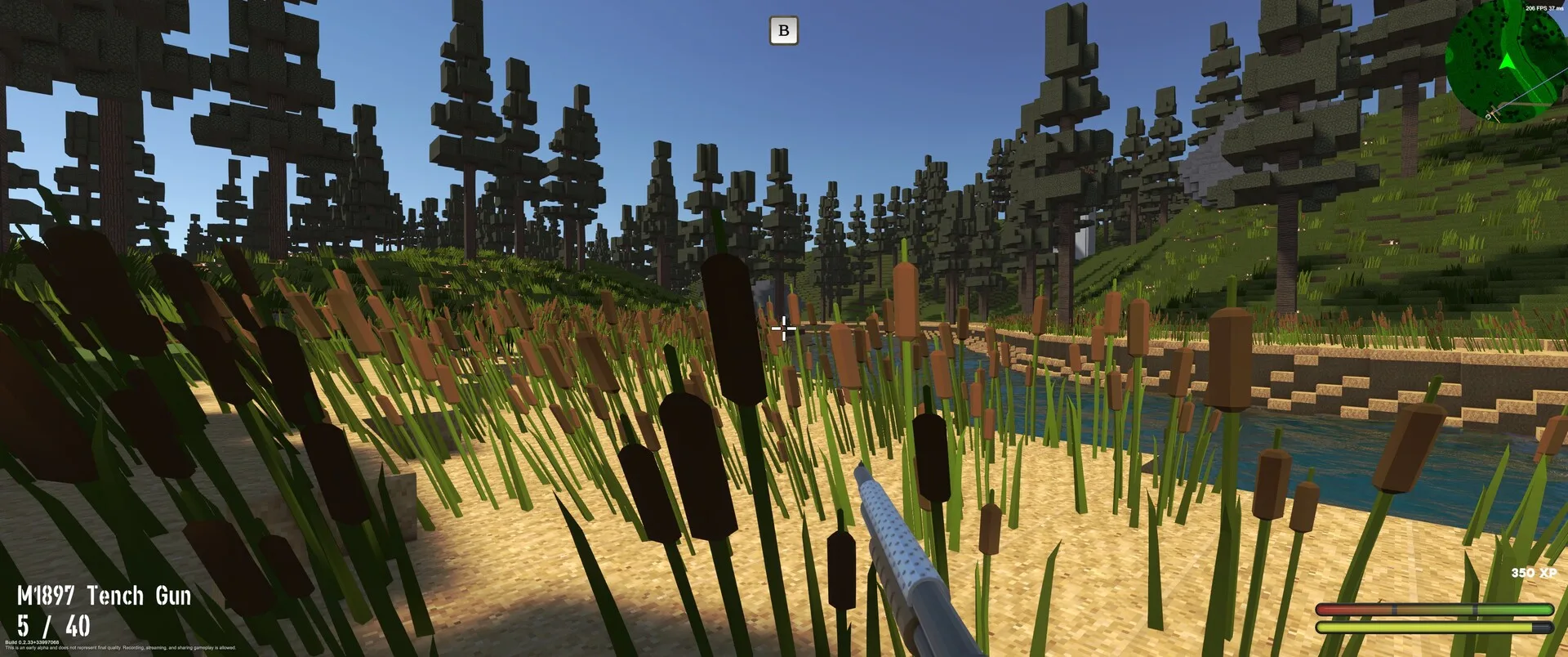
Multiplayer combat in the networked voxel world of Bad Goons
Bad Goons · Authoritative Linux servers · Networked voxel terrain
01

Authority, replication and responsive combat

A multiplayer architecture begins with the actions that must feel immediate and the state that must remain trustworthy. We define authority per system, choose what is predicted, decide how divergence is reconciled and establish the bandwidth and update budgets that the game loop can sustain.

Fast combat, embodied VR interaction and a modifiable voxel battlefield need different replication strategies. We use representative latency, jitter and loss during development so responsiveness is evaluated under production conditions rather than only through a low-latency local test.

  • Server and client authority models
  • Prediction and reconciliation
  • Replication and bandwidth budgets
  • Latency and packet-loss testing
02

Sessions, matchmaking and recovery flows

The match does not begin at the first replicated frame. Parties, session discovery, server allocation, connection tokens, version compatibility and reconnect behavior determine whether players can reach and remain in the game. We model those states explicitly instead of hiding them behind a single Connect button.

Matchmaking rules must balance skill, latency, party composition, wait time and available capacity. When a project needs this layer, we define the measurable trade-offs and the operator controls required to tune them after real players arrive.

  • Party and session state
  • Matchmaking constraints
  • Version-safe connections
  • Reconnect and failure recovery
03

Dedicated game servers and deployment

Authoritative simulation needs a server build that can be produced, deployed, observed and replaced safely. We separate the game client, realtime server, persistent services and infrastructure responsibilities, then automate the build and deployment boundaries the team will operate.

Bad Goons uses Unity headless Linux servers and containerized deployment as part of the production architecture. Capacity, shutdown, health, logs and version rollout are treated as game-facing concerns because infrastructure behavior directly affects active matches and the ability to diagnose player reports.

  • Headless Linux server builds
  • Containerized deployment
  • Health, logs and diagnostics
  • Capacity and version rollout
04

Multiplayer testing and production observability

Network defects are difficult to reproduce when builds do not expose the state that caused them. We add diagnostics around connection state, authority changes, replication pressure, server performance and failure paths, then preserve scenarios that can be used for regression testing.

Load tests are designed around the workload that matters: active simulations, mutable world state, reconnect bursts or service dependencies. The goal is not a vanity concurrent-user number, but evidence that the architecture degrades predictably and gives operators enough information to act.

  • Network simulation and regression
  • Server performance profiling
  • Load scenarios tied to the game loop
  • Operational dashboards and runbooks

COMMON QUESTIONS

What teams ask before we begin.

Can you add multiplayer to an existing Unity game?

Sometimes, but the right first step is an architecture and game-loop assessment. State ownership, determinism, physics, content assumptions and client architecture determine whether multiplayer can be introduced incrementally or needs targeted restructuring.

Do you build dedicated game servers as well as client netcode?

Yes. Documented work includes Unity headless Linux servers, containerized deployment, client prediction and authoritative simulation. The exact persistent backend and hosting scope is defined separately for each game.

Which networking framework do you use?

The framework follows the game, target platforms, authority model and team ownership. Bad Goons uses FishNet, while earlier projects used different approaches. We do not force every production into one networking stack.

START A CONVERSATION

Need a game development partner?

Bring Sourcegarden Studio an idea, a prototype, or a production already in motion. We’ll help define the right development scope.

Discuss your game