AR & XR DEVELOPMENT

Augmented reality development for real places.

Sourcegarden Studio brings game-engine production thinking to AR and XR products: spatial interaction, visual positioning, real-time 3D, performance and field validation. The capability is grounded in current team work on the location-based historical AR project If These Streets Could Talk.

Discuss your project
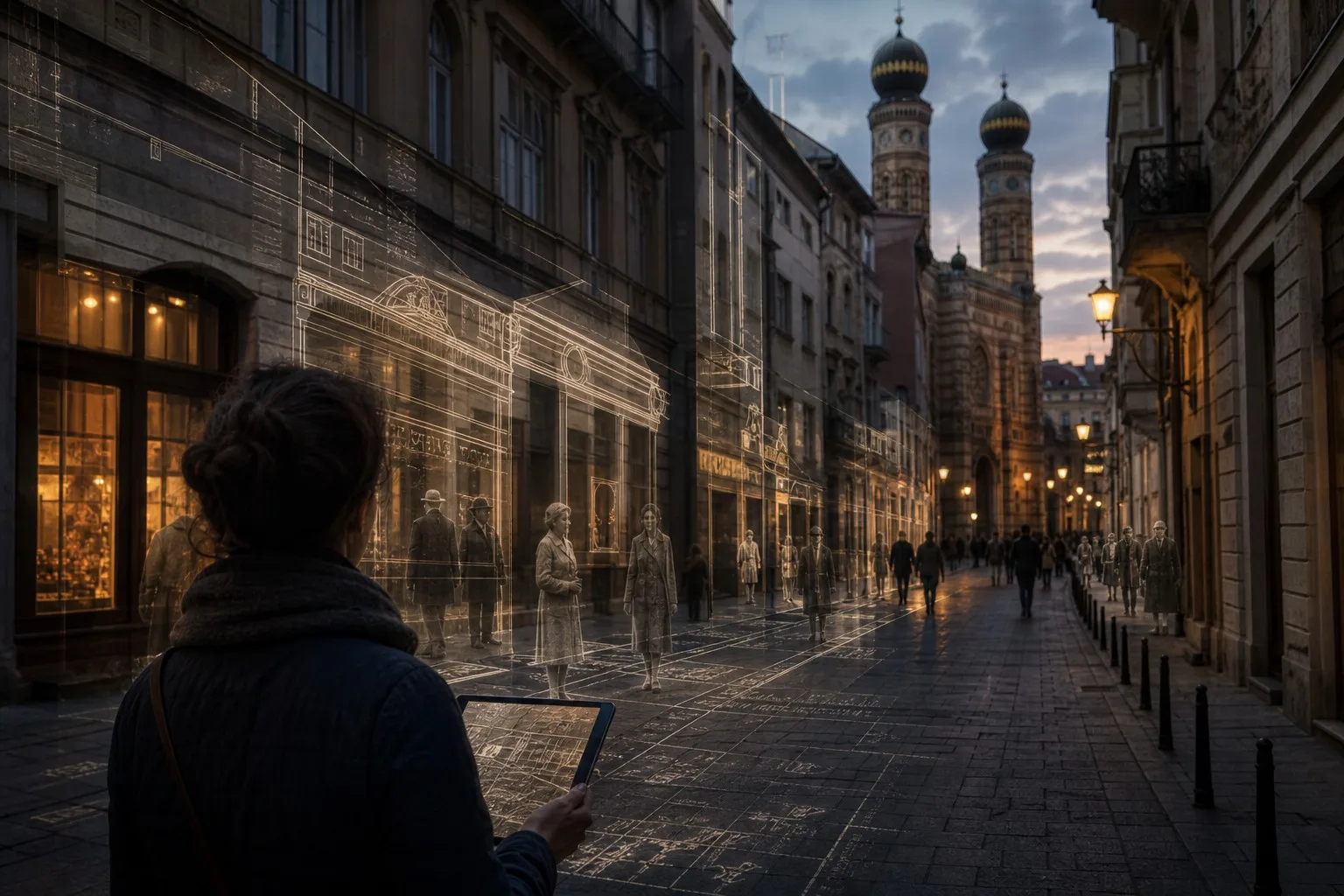
A historical augmented reality reconstruction aligned with a Budapest street
If These Streets Could Talk · Location-based AR/XR · Visual positioning
01

Spatial product discovery before content scale

An augmented reality product succeeds when the digital layer has a clear reason to share space with the physical world. We begin with the user journey, environment, device behavior and operational context, then prototype the spatial interaction that carries the product's value.

Early field tests expose constraints that do not appear at a desk: lighting, occlusion, camera access, pedestrian movement, connectivity, device heat and the reliability of environmental features. Those findings shape the content model and technical plan before the project invests in production volume.

  • Spatial product and interaction design
  • Location and device constraints
  • Risk prototypes on target devices
  • Content and production planning
02

Visual positioning and persistent alignment

Location-based AR needs more than geographic coordinates when a reconstruction must meet a doorway, façade or boundary. Visual positioning compares the live camera image with mapped environmental landmarks to resolve device position and orientation, allowing content to remain anchored to the place users are actually viewing.

If These Streets Could Talk uses this approach for millimetre-level visual registration across dense streets in central Pest. Team experience covers the practical relationship between mapping, landmark quality, pose resolution, digital reconstruction and the interaction design required when alignment confidence changes.

  • Visual positioning workflows
  • Spatial maps and landmarks
  • Persistent content registration
  • Alignment confidence and recovery
03

Real-time 3D, mobile performance and spatial UX

AR development combines a live camera, tracking and real-time content inside the power and thermal envelope of a mobile device. We set budgets for geometry, materials, lighting, memory and loading, then validate visual quality against tracking stability and the time users spend in the experience.

Game development experience is useful here because interaction, rendering and feedback must operate as one loop. We design readable prompts, safe movement, content transitions and fallbacks so the experience remains understandable even when the environment or tracking conditions are imperfect.

  • Mobile rendering and memory budgets
  • Spatial interaction feedback
  • Tracking-aware UX states
  • On-location performance testing
04

Connected content and responsible operation

Many immersive applications need versioned media, location data, analytics and content updates after the client ships. We define those contracts around intermittent connectivity, cache behavior and the operational ownership required to keep an experience current without breaking installed clients.

The product context also matters. Historical, training and public-space experiences can carry safety, accessibility and ethical responsibilities that ordinary game mechanics do not. We make those constraints explicit in review, testing and content workflows rather than treating them as copy added before launch.

  • Versioned spatial content
  • Offline and poor-network behavior
  • Operational diagnostics
  • Accessibility and responsible interaction

COMMON QUESTIONS

What teams ask before we begin.

What kind of AR development does Sourcegarden Studio support?

Our documented team experience is strongest in location-based AR/XR, visual positioning, spatial storytelling and real-time 3D. We scope platform and tracking technology only after the product, environment and device requirements are known.

Can you build an AR prototype before a full production?

Yes. A field-tested prototype is usually the best first delivery because it can validate tracking, alignment, interaction, target-device performance and content workflow before production scale.

Do you claim ARKit, ARCore or a specific headset stack?

Not by default. We do not list a platform SDK as experience unless it is supported by the project scope and team evidence. Technology selection follows the target devices, tracking requirements and distribution plan.

START A CONVERSATION

Need a game development partner?

Bring Sourcegarden Studio an idea, a prototype, or a production already in motion. We’ll help define the right development scope.

Discuss your game